Be yourself; Everyone else is already taken.
— Oscar Wilde.
This is the first post on my new blog. I’m just getting this new blog going, so stay tuned for more. Subscribe below to get notified when I post new updates.
Be yourself; Everyone else is already taken.
— Oscar Wilde.
This is the first post on my new blog. I’m just getting this new blog going, so stay tuned for more. Subscribe below to get notified when I post new updates.
Since the transfer of power took place on the midnight of 14 and 15 August, the Indian Independence Act 1947 recognized 15 August as the birthday of both Pakistan and India. The act states As from the fifteenth day of August, nineteen hundred and forty-seven, two independent Dominions shall be set up in India, to be known respectively as India and Pakistan.Jinnah in his first broadcast to the nation stated August 15 is the birthday of the independent and sovereign state of Pakistan. It marks the fulfillment of the destiny of the Muslim nation which made great sacrifices in the past few years to have its homeland.The first commemorative postage stamps of the country, released in July 1948, also gave 15 August 1947 as the independence day, however in subsequent years 14 August was adopted as the independence day. This is because Mountbatten administered the independence oath to Jinnah on the 14th, before leaving for India where the oath was scheduled on the midnight of the 15th. The night of 14–15 August 1947 coincided with 27 Ramadan 1366 of the Islamic calendar, which Muslims regard as a sacred night.
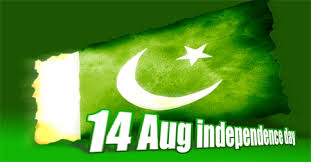
In the 1940s, as the Indian independence movement intensified, an upsurge of Muslim nationalism helmed by the All-India Muslim League took place, of which Muhammad Ali Jinnah was the most prominent leader. Being a political party to secure the interests of the Muslim diaspora in British India, the Muslim League played a decisive role during the 1940s in the Indian independence movement and developed into the driving force behind the creation of Pakistan as a Muslim state in South Asia.During a three-day general session of All-India Muslim League from 22–24 March 1940, a formal political statement was presented, known as the Lahore Resolution, which called on for the creation of an independent state for Muslims. In 1956, 23 March also became the date on which Pakistan transitioned from a dominion to a republic, and is known as
This is an example post, originally published as part of Blogging University. Enroll in one of our ten programs, and start your blog right.
You’re going to publish a post today. Don’t worry about how your blog looks. Don’t worry if you haven’t given it a name yet, or you’re feeling overwhelmed. Just click the “New Post” button, and tell us why you’re here.
Why do this?
The post can be short or long, a personal intro to your life or a bloggy mission statement, a manifesto for the future or a simple outline of your the types of things you hope to publish.
To help you get started, here are a few questions:
You’re not locked into any of this; one of the wonderful things about blogs is how they constantly evolve as we learn, grow, and interact with one another — but it’s good to know where and why you started, and articulating your goals may just give you a few other post ideas.
Can’t think how to get started? Just write the first thing that pops into your head. Anne Lamott, author of a book on writing we love, says that you need to give yourself permission to write a “crappy first draft”. Anne makes a great point — just start writing, and worry about editing it later.
When you’re ready to publish, give your post three to five tags that describe your blog’s focus — writing, photography, fiction, parenting, food, cars, movies, sports, whatever. These tags will help others who care about your topics find you in the Reader. Make sure one of the tags is “zerotohero,” so other new bloggers can find you, too.

 Travel Blogger